Rhode Island Red: Complete Breed Profile
If you’re looking for a picture-perfect breed that lays eggs like a pro, the Rhode Island Red will surely meet your standards. This stunning American breed is a true favorite among chicken keepers. Not only are they easy to care for, but they are also a top contender for beginning poultry enthusiasts.
This guide will take you through all you need to know and start with some key takeaways.
- Rhode Island Red hens lay 250 eggs per year
- Crossbreed of oriental breeds with brown leghorns
- Beginner-friendly and easy to take care for
- Popular breed due to their hardiness and egg-laying skills
- Seldom go broody
- 250 Large Brown Eggs Yearly
- Beginner Friendly
- Healthy and Hardy Breed
- Active, Need Plenty of Space
- Vocal Chicken Breed
- Roosters can be assertive
Characteristics
Rhode Island Red chickens are among the most popular chicken breeds in the US. They’re a favorite backyard chicken due to their excellent egg-laying skills and hardy nature.
| Eggs | Up to 250 eggs per year |
| Egg Color | Light brown |
| Egg Size | Large |
| Weight | 6.5 – 8.5 lbs |
| Hardiness | Cold and heat |
| Temperament | Assertive and sometimes loud, but friendly |
| Beginner-friendly | Yes |
| Color | Rusty brown |
Rhode Island reds appear large but are actually medium-sized chickens. They were bred as dual-purpose chickens to produce both meat and eggs and therefore are heavier than pure egg layers like ISA browns or white leghorns.
A standard Rhode Island hen weighs about 6,5 pounds (3 kg), and a rooster weighs 8,5 pounds (3,8 kg). They also come in a Bantam variety, weighing 30 ounces for an adult hen (850 gr) and 34 ounces for a rooster (1 kg).
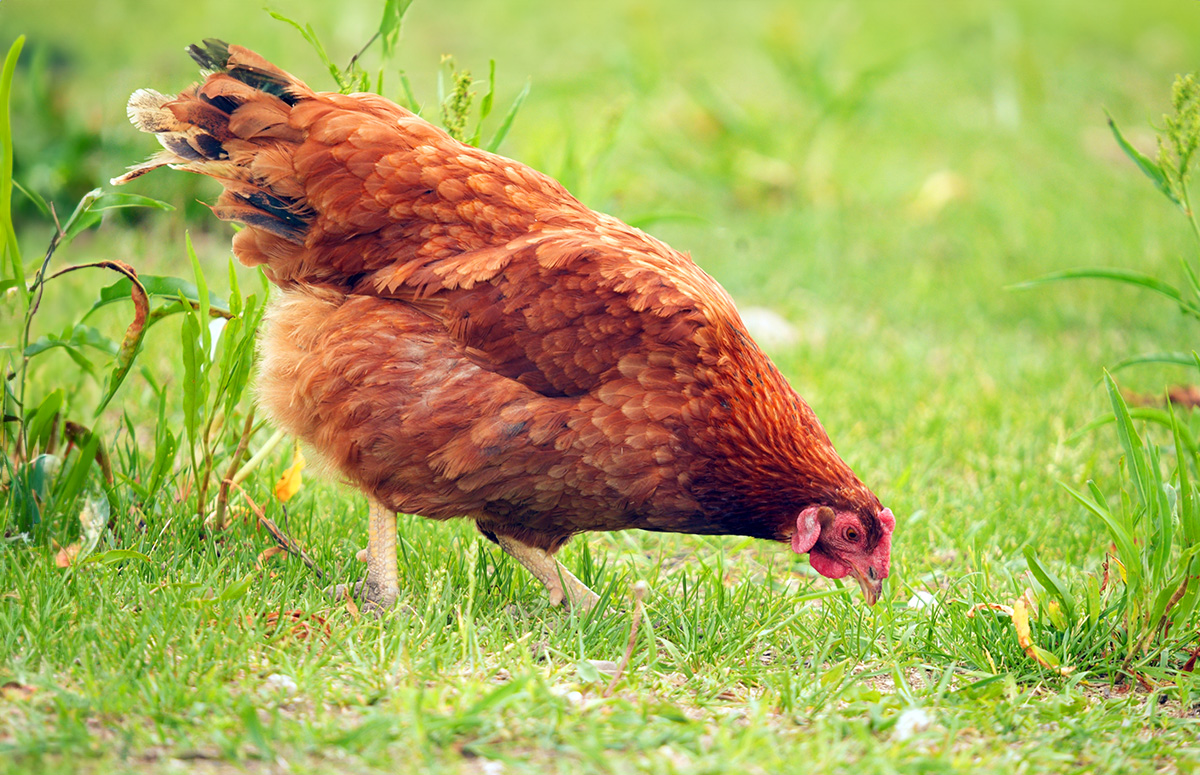
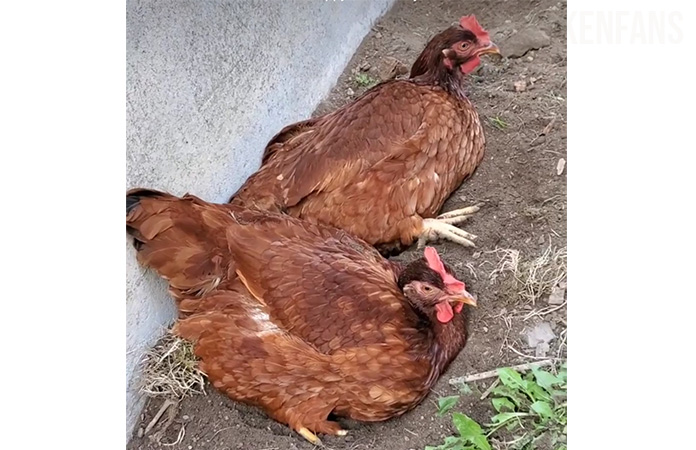
The color of their plumage ranges from rusty brown to almost black, with a hint of red. The tail feathers are mostly black, and sometimes the black carries a rich greenish sheen. The tail itself is well spread, downward, and carried low.
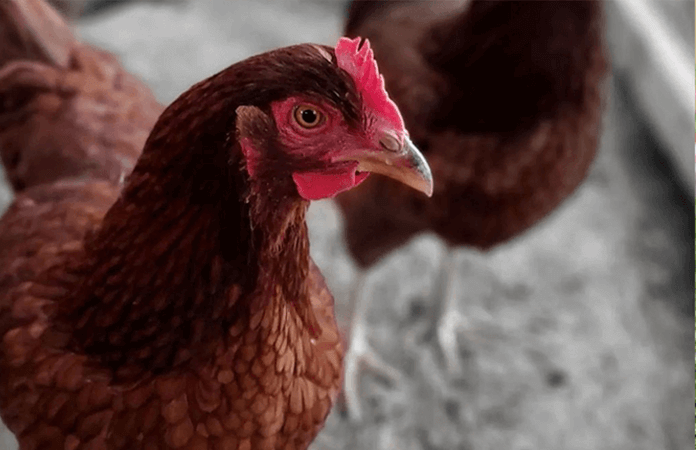
Reds have bright, wide-open eyes, nicely rounded wattles, yellow legs and feet, and a reddish-brown beak. The area around the eyes, as well as the comb and the wattles, are red.
Varieties
Single comb Rhode Island Red
A single comb is a simple one-row comb with spikes on top. It begins at the chicken’s nostrils and sweeps back over its head. It’s a common comb on many breeds of chickens and a recognizable characteristic of many chicken breeds.
Rose Comb Rhode Island Red
A rose comb is rather flat and close to the bird’s head and follows the head shape. This gives the spike a position pointing downward. This variety is relatively uncommon.
Personality
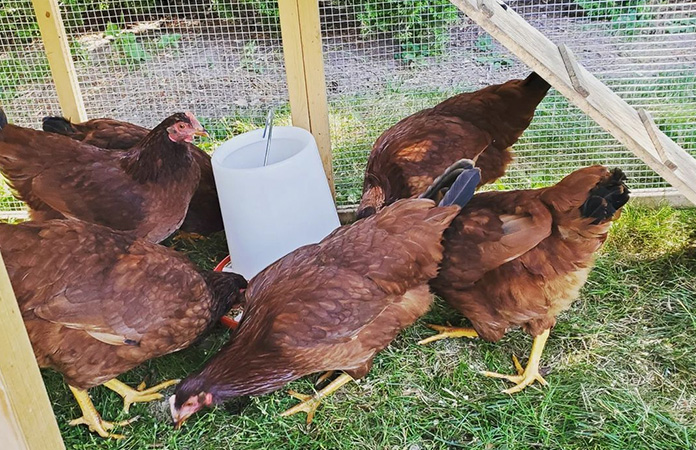
Rhode Island Reds are low-maintenance, beginner-friendly chickens who rarely get sick or need extra care. They are weather-hardy and can thrive in eighter hot temperatures or heavy winters. It’s precisely this ability to adjust that makes them quite easy to keep in whatever climate you’re housing them. However, extreme weather comes with extra care and responsibilities for all animals and pets, even Rhode Island Reds.
Friendly
Reds make great pet chickens. They are very friendly and curious and love to be around humans. If you’re looking for a family-friendly chicken breed that won’t be aggressive toward your children, the Rhode Island Red is exactly what you’re looking for.
However, this does not include Rhode Island Red roosters, as they are known to be more aggressive and assertive. Taking a Rhode Island Red as a rooster inside your flock is a gamble; we recommend other breeds if you’re looking for a human-friendly rooster.
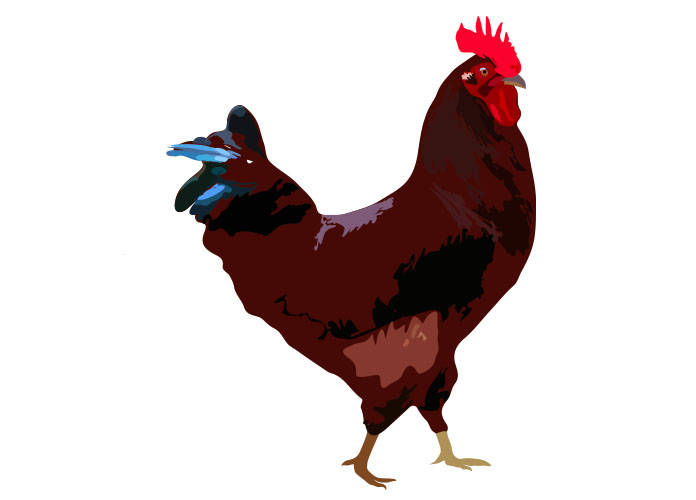
Rhode Island Red hens are never aggressive or unfriendly, at least not to humans. But they tend to be the more assertive hens inside the flock and are usually on top of the pecking order. Mix Reds with other chicken breeds with other more friendly but assertive breeds like the Wyandotte or a Barred Rock.
Don’t keep Rhode Island Red hens with smaller chickens like Silkies, Faverolles, Cochin Bantams, or Frizzle Chickens, as the small breeds will get bullied.
Loudness
Compared to other chicken breeds, Rhode Island Reds can be pretty loud before, during, and after egg-laying. However, this depends from hen to hen. There are plenty of Red hen owners out there who never had any issues with noisiness.
But if you live in a suburban neighborhood and don’t want your neighbors to complain, a Rhode Island Red may be a gamble.
Love to Free-Range
Rhode Island Reds are fairly big chickens, so they need their space. Find out how much space a chicken needs with our ‘Chicken Space Calculator’. But keep in mind that these are minimum requirements. For a Red, providing more space than needed or letting them free range is always better.
No problem if you don’t have the land to free-range your Rhode Island Reds. Provide them with an enclosed run that is big enough for all of them, with plenty of activities like dust baths, plants, or leaf piles so they can scratch their feet in the dirt while looking for bugs or leftovers.
Egg production
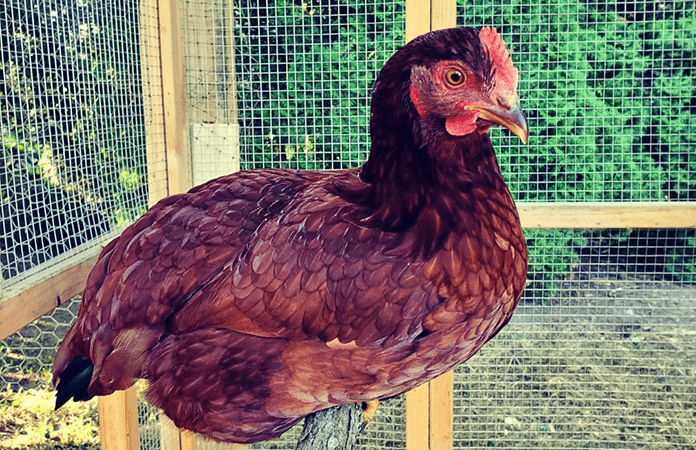
The Rhode Island Red was developed as a dual-purpose breed to provide both eggs and meat. But overall, its primary purpose is egg-laying. A Rhode Island red lays approximately five eggs per week, more than 250 eggs yearly! Their eggs are large in size and always light brown in color.
Because of the Reds’ cold hardy character, they won’t stop laying during winter as quickly as other breeds, although their egg production will temporarily decrease. So, keeping Rhode Island red hens will ensure you a year-round egg supply, except during molt.
Rhode Island Red hens seldom get broody. Therefore, they are not the best choice in chicken breeds if you want to hatch baby chicks. On the other hand, since they seldom get broody, egg production always stays the same as they won’t stop laying due to broodiness.
History
The Rhode Island Red originates in, of course, the state of Rhode Island but also Massachusetts in the second half of the nineteenth century. It is also the state of Rhode Island’s official bird.
By selective breeding of Oriental breeds such as Java and Malay with Brown Leghorns, the Rhode Island Red was born and became one of the most popular chicken breeds after a time. In 1898 the Rhode Island Red club in Boston drew up and approved the first breeds’ standard.
To sum up
The Rhode Island Red is, at this moment, one of the most popular chicken breeds in the world. It’s a beginner-friendly breed, low in maintenance, and can be kept for both eggs and meat. They are also known to be very friendly and curious chickens, but be careful with keeping a Rhode Island Red Roo, as they can be assertive.
The hens are not aggressive at all but can be dominant towards other breeds and are most likely on top of the pecking order. Try to place Rhode Island Reds together with other ‘more dominant’ breeds and not with small breeds like Silkies.
They are excellent egg layers and will provide you with more than 250 eggs annually! So start looking up those eggcellent recipes!
If you want to learn more about chicken breeds, check out our ‘Chicken Breeds Page‘ to see every specific breed we address. Or go to our listicle breed summary on ‘The Classroom‘, or, if you’re unsure where to start, browse our ‘Chicken Breeds: Ultimate Beginners Guide‘.
If you’re interested in reading more on brown-colored chickens, take a look at ‘Top 15 Brown Chicken Breeds: All Beginner-Friendly‘.